

 Thai
Thai
If you are struggling with a “sagging belly” and cannot achieve a flat stomach, even though you have an intense exercise routine and follow a strict diet, this issue is common among postpartum mothers or individuals who have experienced rapid and significant weight loss.
The real issue is not fat, but sagging excess skin that has lost its ability to naturally snap back on its own.
Abdominoplasty, commonly known as Tummy Tuck, is a procedure specifically designed to address this concern directly.
A surgeon will remove excess skin, repair abdominal muscle separation (Diastasis Recti), and reposition the belly button to its appropriate location. The result is a firm, flat abdomen with natural-looking proportions.
At Rattinan Clinic, your safety comes first. Our team of board-certified plastic surgeons and anesthesiologists provides dedicated care throughout your entire procedure.
Every procedure is performed in an AACI-accredited operating room, ensuring that your journey is in the hands of experts who truly care, understand your goals, and are committed to achieving outstanding results with you.
What Is a Tummy Tuck? How Is It Different from Liposuction?
When searching for a solution to a sagging belly, many people are often unsure whether to choose “abdominal liposuction” or “abdominoplasty,” as both procedures can offer similar results.
In reality, both procedures are designed to entirely address different concerns and are recommended based on an individual’s unique body type.
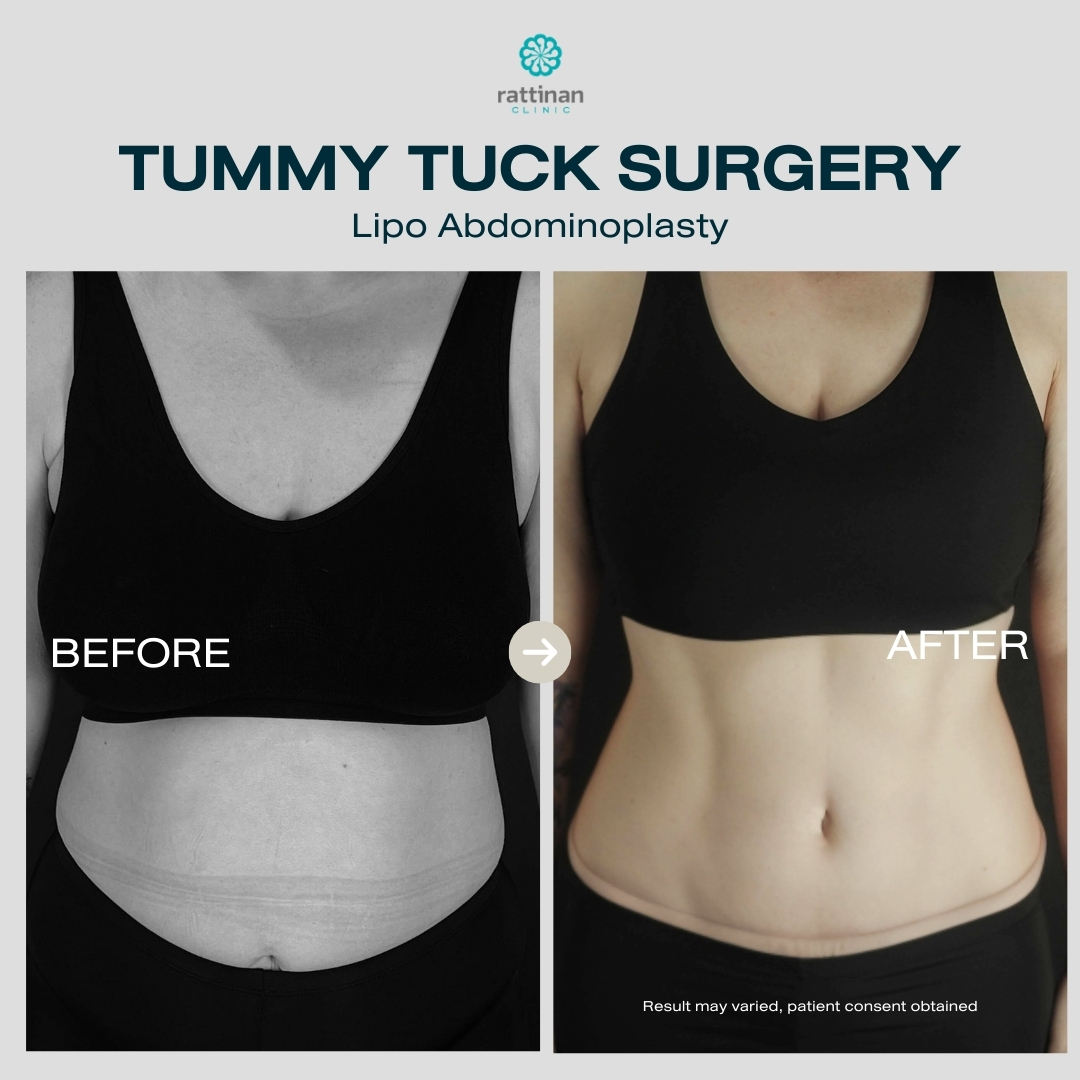
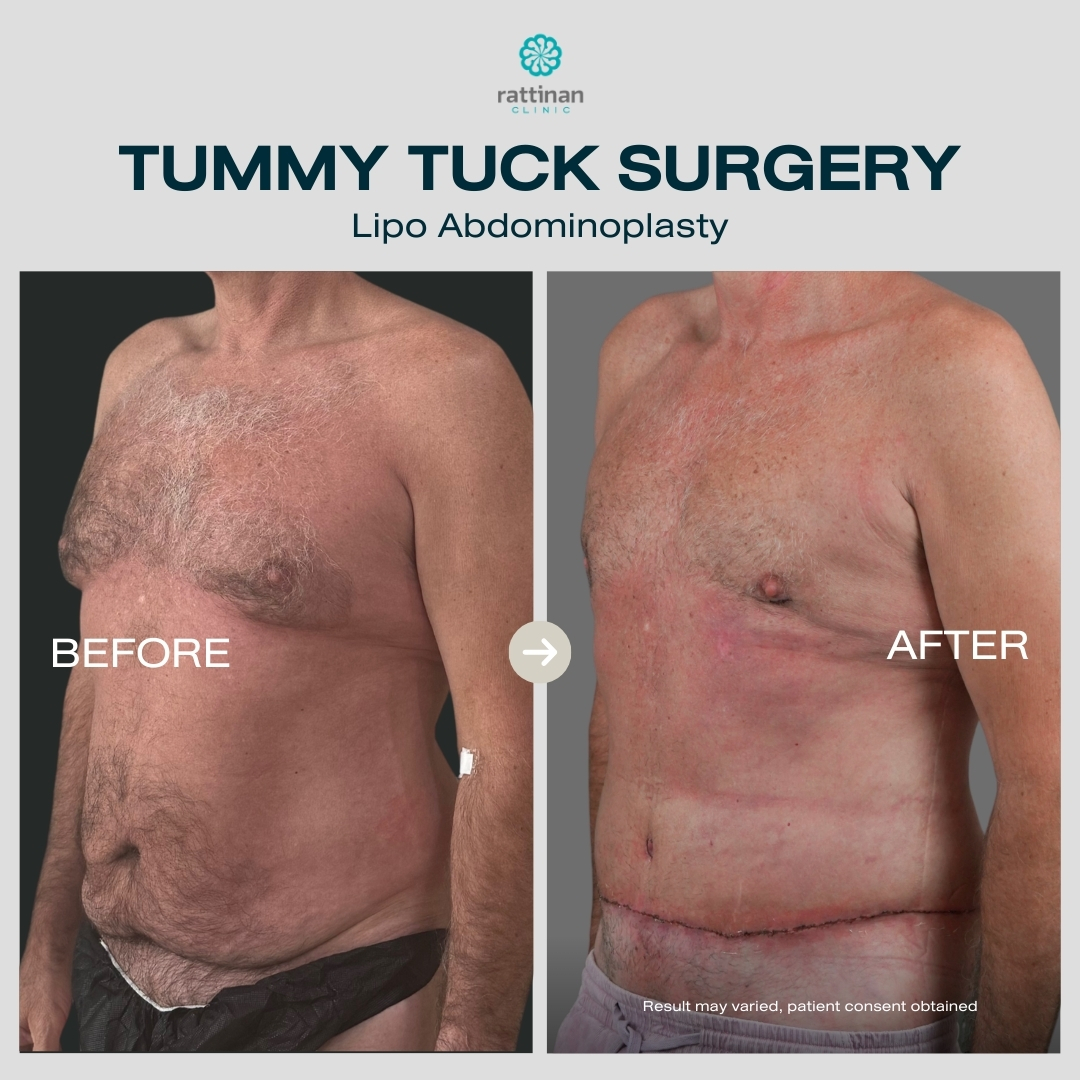
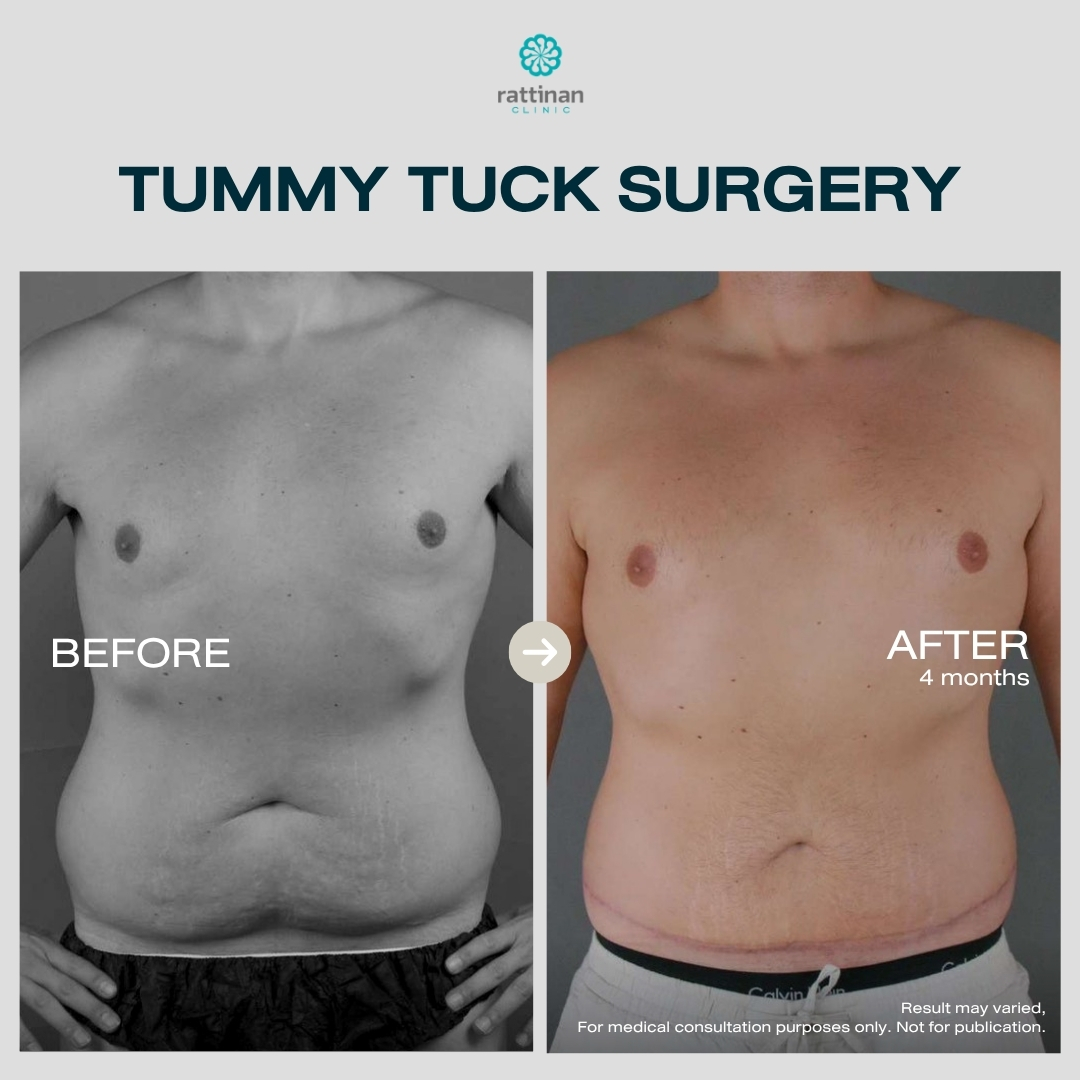
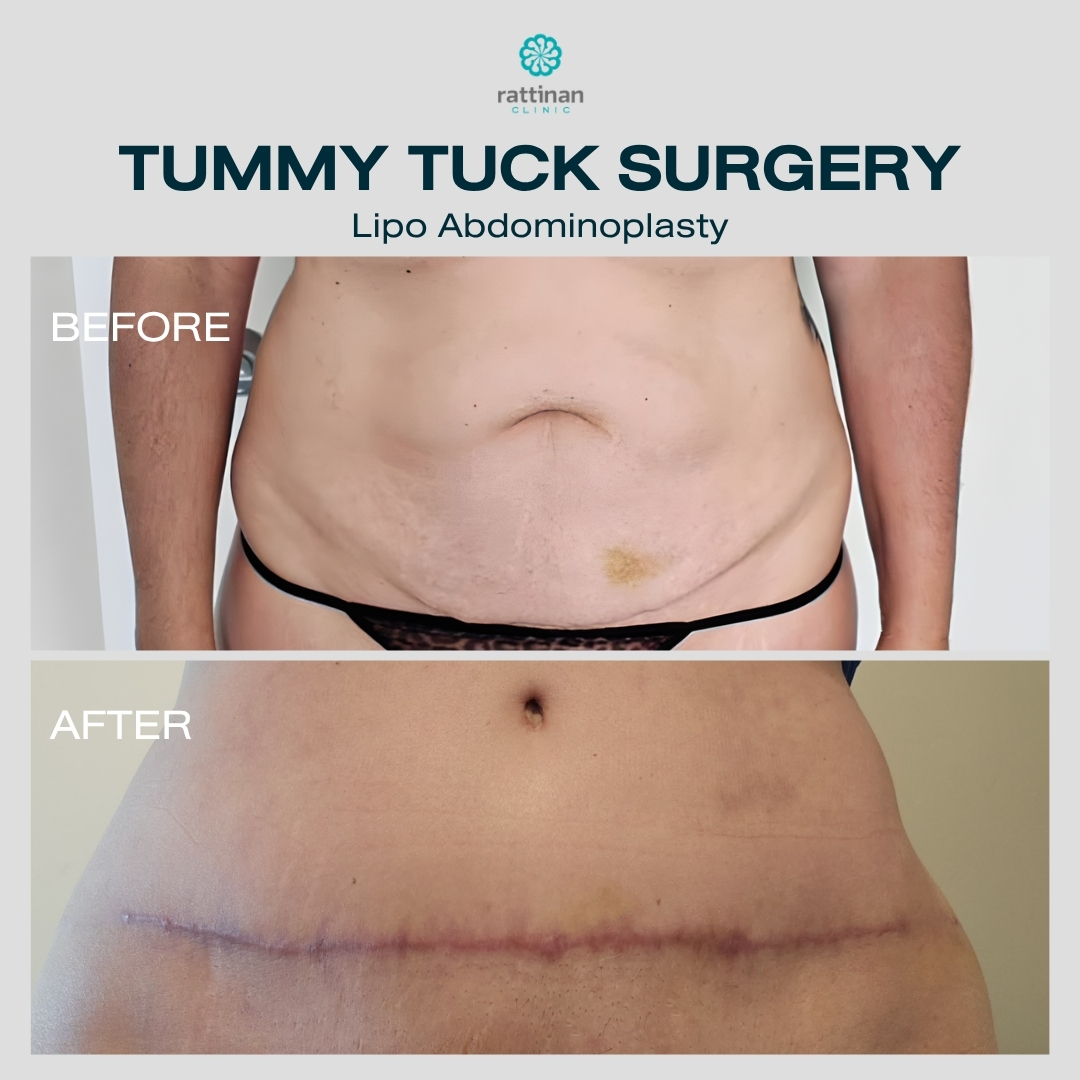
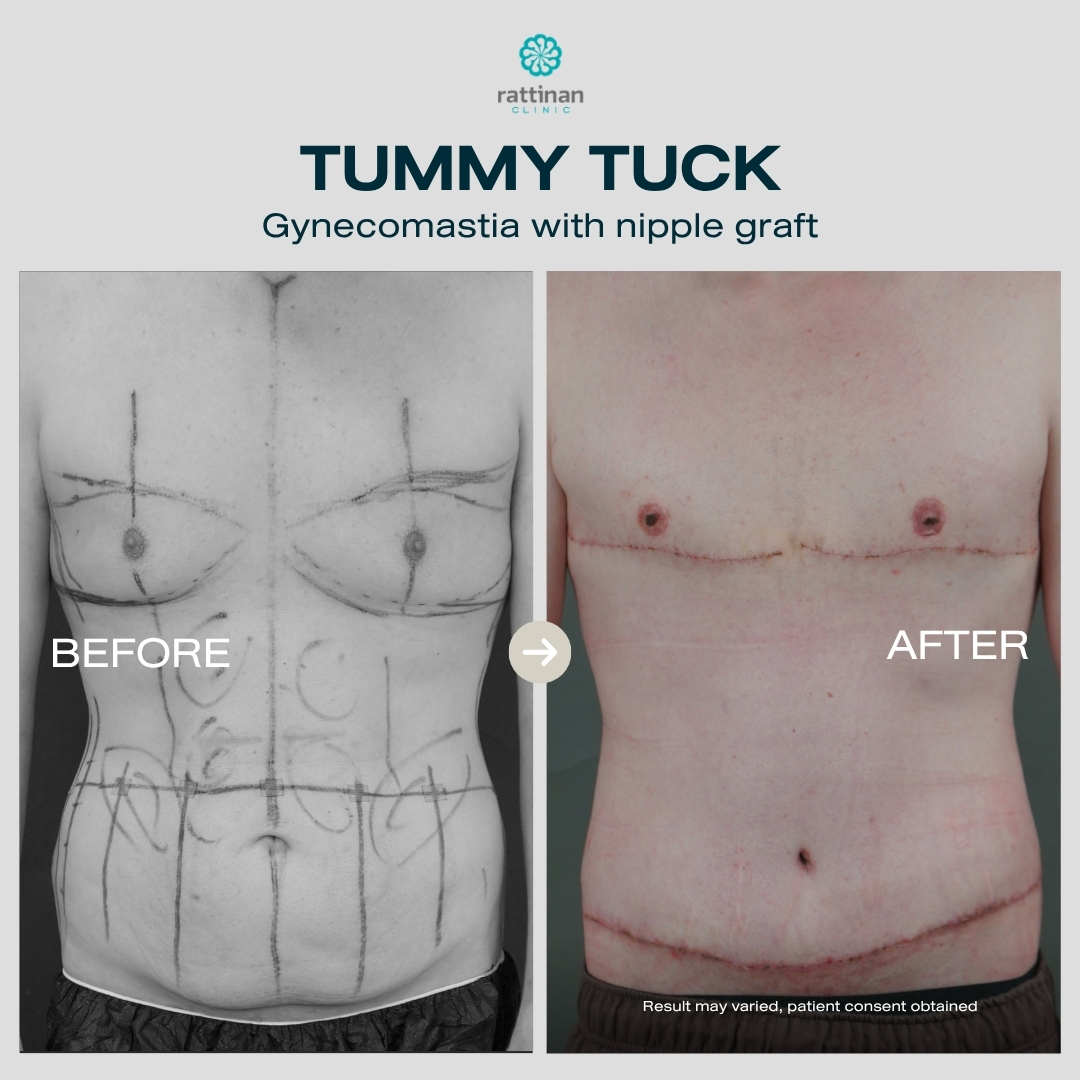
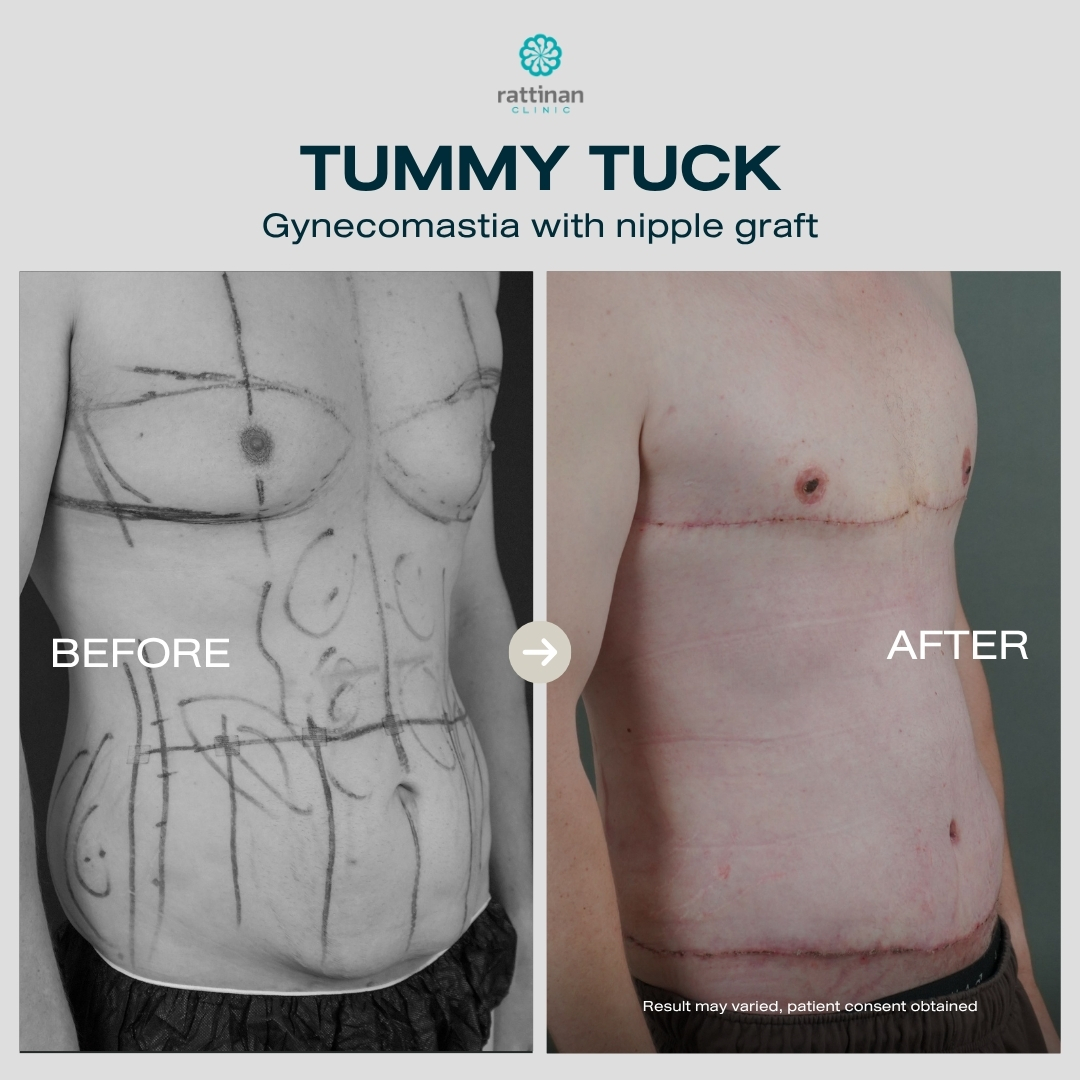
The Process of the Tummy Tuck Procedure
Abdominoplasty, or a Tummy Tuck, is a procedure designed to address the underlying structural issues of the abdomen, rather than reducing fat. The process involves 3 key steps working in harmony:
1.Skin Excision
The surgeon makes a low transverse incision just below the bikini line to remove excess, sagging skin and stretch marks. This placement is strategically designed to remain hidden within the underwear line, ensuring the scar is mostly invisible even when wearing swimwear.
2.Diastasis Recti Repair
For those who have experienced pregnancy or significant weight gain, the Rectus Abdominis (six-pack muscles) often separate along the midline; it is a condition known as Diastasis Recti. The surgeon will surgically tighten and draw these muscles back together, significantly narrowing the waistline and restoring a visible flatter abdomen.
3.Umbilical Transposition
Because the skin is pulled downward after excess skin is removed, the original position of the belly button will shift. The surgeon will reposition the belly button that is perfectly aligned with your unique body proportions.
A Comparison: Tummy Tuck vs. Liposuction vs. Non-Surgical Skin Tightening
Topic | Tummy Tuck | Abdominal Liposuction | J-Plasma Skin Tightening |
Ideal for | Significant sagging skin, muscle separation, and extensive stretch marks | Stubborn fat deposits with good skin elasticity | Mild skin laxity and minimal excess fat |
Primary Concerns Addressed | Excess skin, Muscle repair, Stubborn fat | Localized fat deposits | Skin sagging + Minimal fat deposits |
Procedure Type | Major surgery under general anesthesia | Minimally invasive procedure | Minor procedure ( performed with liposuction) |
Recovery Time | 2-4 weeks | 1-2 weeks | 3-7 days |
Scaring | Linear incision below the bikini line | Small punctures (less than 1 cm) | Small punctures (less than 1 cm) |
Results | Comprehensive and dramatic transformation | Fat reduction and body contouring | Enhanced skin tightening compared to liposuction alone |
Lipoabdominoplasty: Tummy Tuck and Liposuction in a Single Procedure
At Rattinan Clinic, we view tummy tuck surgery as more than just “removing excess skin.” For suitable candidates, our surgeons utilize Lipoabdominoplasty technique.
Combining liposuction with abdominoplasty in a single procedure addresses abdominal concerns comprehensively as follows:
- Simultaneously address fat, skin, and muscles concerns
- Enhance and sculpt a more defined waistline
- Reduce the risk of an unnatural or uneven post-surgical appearance
However, a comprehensive assessment by our specialized surgeons is essential for every patient. This ensures a personalized surgical plan tailored to each individual’s unique body structure.
Who Can Benefit from Tummy Tuck?
Before deciding on surgery, it is essential to evaluate whether this procedure truly aligns with your needs. A tummy tuck is not a universal solution; rather, it is designed for individuals with structural concerns that cannot be corrected through other methods.
Check if any of these common concerns apply to you:
- Postpartum Mothers with Diastasis Recti
Common symptoms:
- A persistent bulge in the center of the abdomen that remains even after weight loss.
- A visible ridge or protrusion appearing in the midline when straining or sitting up.
- Core weakness and frequent lower back pain.
Why surgery is necessary:
Diastasis Recti occurs when the Rectus Abdominis muscles separate during pregnancy. Exercise and diet cannot “pull” these muscles back together once the connective tissue has overstretched. Surgical repair is the only way to tighten the abdominal muscles.
- Massive Weight Loss Patients with Excess Skin
Common symptoms:
- Significant weight loss, typically 20–30 kg or more.
- Hanging folds of abdominal skin (referred to as “Panniculus” or “Apron skin”).
- Recurring issues with rashes, fungal infections, or odors within the skin folds.
- Experience discomfort when exercising or choosing clothes.
Why surgery is necessary:
When skin is stretched beyond its elastic limit, collagen and elastin fibers lose their ability to snap back. Surgery is the only method to remove this excess tissue and restore a firm, contoured abdomen.
- Individuals with Extensive Stretch Marks Below the Navel
Common symptoms:
- Dense, deep stretch marks concentrated from the belly button down to the pubic area.
- Thin, wrinkled skin with uneven texture.
- Previous laser treatments or topical creams have failed to show visible improvement.
Why surgery is necessary:
Stretch marks represent deep tears in the dermal layer that cannot be fully repaired by laser or topical creams. During a Tummy Tuck, the surgeon physically removes the skin below the navel, along with the stretch marks, resulting in significantly smoother abdominal skin.
- Patients with loose skin after liposuction
Common symptoms:
- Fat was successfully removed, but the remaining skin appears loose and saggy.
- Uneven abdominal contours or a rippled skin texture (Skin Laxity).
- Results that did not meet the patient’s expectations.
Why surgery is necessary:
Liposuction is designed to reduce fat volume, not to tighten skin. In patients with poor skin elasticity or after large-volume fat removal, the skin often fails to contract. A Tummy Tuck is the essential second step to address those issues.
Who Is a Candidate for a Tummy Tuck?
Before surgery, you should also meet these requirements.
Even if you fall into one of the categories mentioned above, the best and safest results are achieved by those who meet the following requirements:
- Stable weight for at least 6–12 months
Significant weight fluctuations after surgery can compromise your long-term results. - No plans for future pregnancy
Future pregnancy may compromise the results. It is recommended to postpone surgery until after childbirth. - Good health with no serious underlying conditions
Conditions such as heart disease, uncontrolled diabetes, or blood clotting disorders increase risks. - Able to quit smoking for at least 4-6 weeks
Smoking severely impairs wound healing and increases the risk of post-operative complications.
Not sure which procedure is right for you?
If you experience only some of these symptoms, or if you are unsure whether your concerns require surgery, a professional consultation is the most important step because everyone has a unique body structure and varying degrees of concerns.
The Different Techniques of Abdominoplasty
There is no single approach to abdominoplasty. Instead, several techniques are designed to address varying degrees of concern, ranging from localized corrections to comprehensive body contouring.
Choosing the right technique is the key to achieving both safety and aesthetic results.
Mini Tummy Tuck: For Concerns Specifically Below the Navel with a C-Section Sized Scar
Who is an ideal candidate?
The Mini Tummy Tuck is a technique designed for those with mild skin laxity or a slight bulge specifically in the area below the navel. It is particularly suitable for mothers who already have a C-section scar and wish to improve the appearance of that area.
Surgical procedure:
- The incision is shorter than a Full Tummy Tuck and follows the same line as a C-section scar.
- Excess skin is removed only from below the navel.
- There is no need to reposition the navel.
- Lower abdominal muscle repair may be performed in some cases.
Advantages:
- Small, easy-to-conceal scar
- Shorter surgical and recovery time
- Faster return to daily life
Limitations:
A Mini Tummy Tuck cannot correct skin laxity above the navel or full-length abdominal muscle separation. If the issues cover the entire abdomen, a more comprehensive technique must be considered.

Full Tummy Tuck: For Significant Sagging Requiring Comprehensive Structural Restoration
Who is an ideal candidate?
The Full Tummy Tuck is the most comprehensive standard technique for those with skin laxity in both the upper and lower abdomen, or clear muscle separation (Diastasis Recti). It is commonly found in post-pregnancy mothers (especially those with multiple pregnancies).
Surgical procedure:
- The incision is a long line from one hip to the other, hidden below the bikini line.
- All excess skin from below the navel is removed.
- Separated abdominal muscles are sutured back together along the entire length.
- A new navel position is created in an appropriate and natural-looking spot.
Advantages:
- Comprehensively addresses skin, muscle, and stretch marks.
- Provides clear results with a flat abdomen and a more contoured waist.
- Suitable for those with multiple levels of concerns simultaneously.
Things you should know:
It requires longer surgical and recovery times than a Mini Tummy Tuck. You must plan for time off work and have a companion during the first week after surgery.

Belt Lipectomy / 360 Body Lift: For Massive Weight Loss Cases
Who is an ideal candidate?
Belt Lipectomy or Circumferential Tummy Tuck is the most comprehensive surgical procedure. It is designed for those who have lost a massive amount of weight (30–40 kg or more) and have loose skin around the entire midsection, front, sides, and back.
Surgical procedure:
- The incision is a 360-degree line around the torso.
- Combines a tummy tuck with the removal of excess skin from the hips, buttocks, and lower back.
- Restructures the proportions for a firm fit around the entire midsection.
Advantages:
- Corrects sagging skin issues all around the torso.
- Ideal for those who have gone through major weight loss and want a “new start” for their body.
- Provides highly visible, transformative results.
Things you should know:
This is a major surgery that takes longer and requires careful recovery. Patients should be in good health and prepared for a longer recovery period.

Lipoabdominoplasty: Liposuction with Skin Removal for a Defined S-Curve
Highlights of this technique
Lipoabdominoplasty is a combination of “liposuction” and “tummy tuck” in a single procedure. This is the approach Rattinan Clinic uses for suitable cases, starting from those requiring a Full Tummy Tuck, to achieve more complete and natural-looking results.
Why combine the two procedures?
In the past, traditional tummy tucks focused only on removing excess skin and suturing muscle but did not manage fat on the waist and flanks. This could result in a flat stomach that lacked a curved waistline or, in some cases, appeared stiff and unnatural.
Lipoabdominoplasty addresses these issues through the following methods:
- Liposuction on the waist, flanks, and lower back to contour the proportions.
- Excess skin removal and muscle repair according to standard protocols.
- The result is an abdomen that is not only flat but also has a clear, natural-looking S-Curve.
Who is an ideal candidate?
- Those with both sagging skin and accumulated fat around the waist.
- Those who want natural-looking results that are not stiff.
- Those who want to solve all their concerns in one procedure.
Things you should know:
The surgeon will evaluate fat volume, skin quality, and body structure to plan the most appropriate treatment for each individual.
Timmy Tuck: Where Is the Incision Located?
Generally, tummy tuck incisions are hidden below the bikini line. Initially, the scar will appear pink or red and will gradually fade and flatten over 6–12 months. At Rattinan Clinic, we design the incision placement to suit each individual’s results, including:
- Low Transverse Incision: The surgical incision is placed in a low horizontal line, positioned beneath the bikini line or underwear line. This allows you to wear swimwear or lingerie without the scar being visible.
- Almond-Shaped Belly Button: For Full Tummy Tuck cases requiring navel repositioning, the surgeon designs the belly button to have a natural almond shape that blends harmoniously with the abdomen.
- Multi-Layered Suturing Technique: The wound is closed in multiple layers, from the muscle and fat layers up to the skin. This reduces tension on the surface skin and helps the resulting scar appear thinner.
Surgical Procedures and Safety Standards at Rattinan Clinic
Deciding to undergo a tummy tuck is a major decision, and concerns regarding safety are completely understandable. At Rattinan Clinic, we prioritize safety standards above all else, as we believe that superior results begin with a safe process.
Comprehensive Pre-Operative Assessment
Before your surgery date, you will undergo a health check-up and medical history review by an anesthesiologist. This is to evaluate risks and create an anesthesia plan tailored specifically to your physical condition.
Standardized Facilities and Operating Rooms
Our operating rooms are equipped with Vital Signs Monitors, ventilators, and emergency systems ready for immediate use to handle any situation.
1:1 Anesthesia Care: Safety First in Every Step
A tummy tuck is a procedure that requires General Anesthesia, meaning the quality of anesthesiology care directly impacts your safety during surgery. At our clinic, an anesthesiologist provides dedicated 1:1 care throughout the entire process.
Personalized Scar Management: Incisions Hidden Below the Bikini Line
One of the most common concerns is post-surgical scarring. At Rattinan Clinic, we employ Personalized Scar Design techniques to ensure the incision is easily concealed and fades naturally over time.
Price Considerations and Choosing the Right Clinic
- Do Not Choose Based on the Lowest Price Alone: Pricing variations depend on the complexity of the case, the surgical technique used (skin removal only or combined with liposuction), and whether 1:1 care is provided by an anesthesiologist.
- What to Verify Before Deciding: Verify your surgeon’s credentials with the Medical Council of Thailand, check if the operating room meets sterile standards, and review the aftercare and follow-up services to ensure peace of mind until the wound is completely healed.
Pre-Operative Preparation and Post-Operative Care
- Before Surgery: Avoid blood thinners, NSAID pain relievers, and supplements such as Vitamin E and fish oil for 1–2 weeks prior to the procedure to prevent excessive bleeding.
- Post-Operative Recovery:
-
- Wear a Compression Garment 24 hours a day during the initial period to reduce swelling and help the skin adhere to the new contours.
- During the first 2–3 weeks, sleep in a semi-seated position (using pillows to prop up the back and under the knees) to reduce tension on the incision.
- Begin light walking within the first 24 hours to stimulate circulation and prevent blood clots.
- Follow detailed wound care instructions strictly to prevent infection.
- Attend all scheduled follow-up appointments for progress checks and suture removal.
- Avoid strenuous exercise for 6–8 weeks. Once fully recovered, most patients find they can exercise more effectively because the core muscles have been surgically strengthened.
Tummy Tuck Pricing at Rattinan Clinic
Body Lift Procedures Pricelist | Starting Price (THB) |
Tummy Tuck/Abdominoplasty | 350,000 |
Belt lipectomy | 650,000 |
Bra Line Back Lift | 260,000 |
Arm Lift (Brachioplasty) | 260,000 |
Inner Thigh Lift (Thighplasty) | 260,000 |
Buttock Lift | 330,000 |
Breast Lift (Mastopexy) | 150,000 - 220,000 |
Frequently Asked Questions (FAQs): The Most Common Concerns for Tummy Tuck Candidates
Q: Is a Tummy Tuck Dangerous? Are There Life-Threatening Risks?
A: It is a major surgery with a high safety profile and an extremely low mortality rate, if it is performed by a board-certified plastic surgeon alongside an anesthesiologist in a standardized medical facility.
Q: What Is the Pain Level and Recovery Timeline?
A: Moderate to high pain is typical during the first 3–5 days (modern pain-relief innovations like local anesthetic pumps can now help significantly). You can usually return to office work within 2–3 weeks and resume normal exercise within 3–6 months.
Q: Will the Scar Look Scary and When Will It Fade?
A: The scar is hidden below the bikini line. During the first 1–2 months, it may appear red and slightly raised. It will gradually flatten and fade significantly within 6–12 months.
Q: Can the Protruding Belly Return after Surgery?
A: Results are permanent, provided you maintain a stable weight (no gain exceeding 10 kg) and do not have future pregnancies.
Q: Can Men Undergo This Procedure?
A: Yes. It is commonly performed on men who have experienced massive weight loss resulting in sagging skin or those who have dealt with long-term abdominal obesity.
Q: Can I Have Children After a Tummy Tuck?
A: Normally, you can. It does not affect the reproductive system. However, it is highly recommended to complete your family planning first, as a new pregnancy will restretch the skin and lead to the recurrence of sagging.
Q: What Is the Minimum Age for This Surgery?
A: Candidates must be at least 18 years old (legal age of majority) and in good overall health to undergo major surgery.
Q: How Long Must I Avoid Exercise After Surgery?
A: Avoid strenuous exercise for 6–8 weeks. After full recovery, many find they can exercise more effectively because the core muscles have been surgically repaired and strengthened.
Q: What Is the Most Important Thing to Avoid Before Surgery?
A: You must stop smoking and vaping 4–6 weeks prior (nicotine causes delayed healing and skin necrosis). Additionally, avoid blood thinners and supplements like Vitamin E and fish oil for 1–2 weeks before the procedure.
Q: What Is the Best Sleeping Position After Surgery?
A: You must sleep in a semi-seated position (Semi-Fowler’s position) using pillows to prop up your back and knees for the first 2–3 weeks to reduce tension on the incision.
Q: How Long Must I Wear the Compression Garment?
A: During the first 1–2 weeks, it must be worn 24 hours a day (removing it only for showering) to reduce lymphatic swelling and help the body contours settle faster.
Q: What Post-Operative Symptoms Are Normal vs. Abnormal?
A:
- Normal: Swelling, bruising, numbness on the abdominal skin, itching, and slight clear serous drainage.
- Abnormal (Contact a doctor immediately): Fever above 38.5°C, redness/heat/pus at the incision site, excessive or uncontrollable bleeding, shortness of breath, or pain in only one leg.
Q: Why Do Prices for Tummy Tucks Vary Between Clinics?
A: Pricing depends on the complexity of the case, the surgical technique (such as whether liposuction is included), and safety protocols, such as dedicated 1:1 care by a professional anesthesiologist.
Q: Why Should I Avoid Unusually Cheap Offers?
A: Extremely low prices may indicate cost-cutting in safety areas, such as using non-specialized surgeons, the absence of an anesthesiologist, or using non-sterile operating rooms which carry a high risk of infection.
Our Expert Medical Contributors are licensed doctors and specialists who ensure every article is accurate, trustworthy, and easy to understand. Guided by our commitment to safety, care, and confidence, they provide expert insights to help patients make informed decisions. At Rattinan, we believe that knowledge is the first step to transformation.
Related Doctor
JATUPORN SUESAT, M.D.
DITSAYANIN THAWEETHANATSIT, M.D.
SUNISA THONGPRAYOON, M.D.
Related Articles
Belt Lipectomy in Thailand: The 360° Solution for Total Body Contouring
Bra line backlift correct sagging skin and excess fat around the back
Arm Lift Surgery (Brachioplasty)
Mommy Makeover in Bangkok at Rattinan | Restore Your Body After Pregnancy