
 Thai
Thai English
When your legs feel heavy, tender, swollen, or painful despite healthy eating and exercise, it can be deeply discouraging to be told it is “just weight gain.”
Lipedema is a chronic adipose tissue disorder that primarily affects women and can cause painful fat buildup in the legs, hips, and thighs, and sometimes in the arms. It is not laziness, poor discipline, or something you caused.
For many women, lipedema legs carry emotional weight as well as physical discomfort. Easy bruising, sensitivity to touch, and stubborn changes in body shape can feel frustrating and isolating. With the right diagnosis and a personalized lipedema surgery Thailand plan, you can move from self-blame toward understanding, relief, and renewed confidence.
Below, we’ll guide you through the signs, key differences from cellulite, and treatment options.
What is Lipedema? Identifying the Symptoms
What is lipedema? For many women, it can feel deeply frustrating when the legs feel heavy, tender, or out of proportion despite maintaining healthy habits. Lipedema is a chronic fat-distribution condition that most commonly affects the legs, hips, thighs, and sometimes the arms. It is not simply weight gain, and it is not something you caused.
Common symptoms of lipedema legs may include:
- A heavy, aching feeling in the legs, especially after standing, walking, or a long day.
- Symmetrical fat buildup, meaning both legs are usually affected similarly.
- Tenderness or pain to touch, even with light pressure.
- Easy bruising, sometimes without a clear injury.
- Swelling or fullness in the legs, thighs, hips, or calves.
- Feet usually remain unaffected, creating a visible “cuffing” effect where the fat stops around the ankles.
- Stubborn leg shape, where the upper body may change with diet and exercise, but the legs remain enlarged or painful.
Recognizing these signs can be the first step toward feeling understood, supported, and guided toward the right lipedema treatment plan.
Lipedema vs. Cellulite: How to Tell the Difference
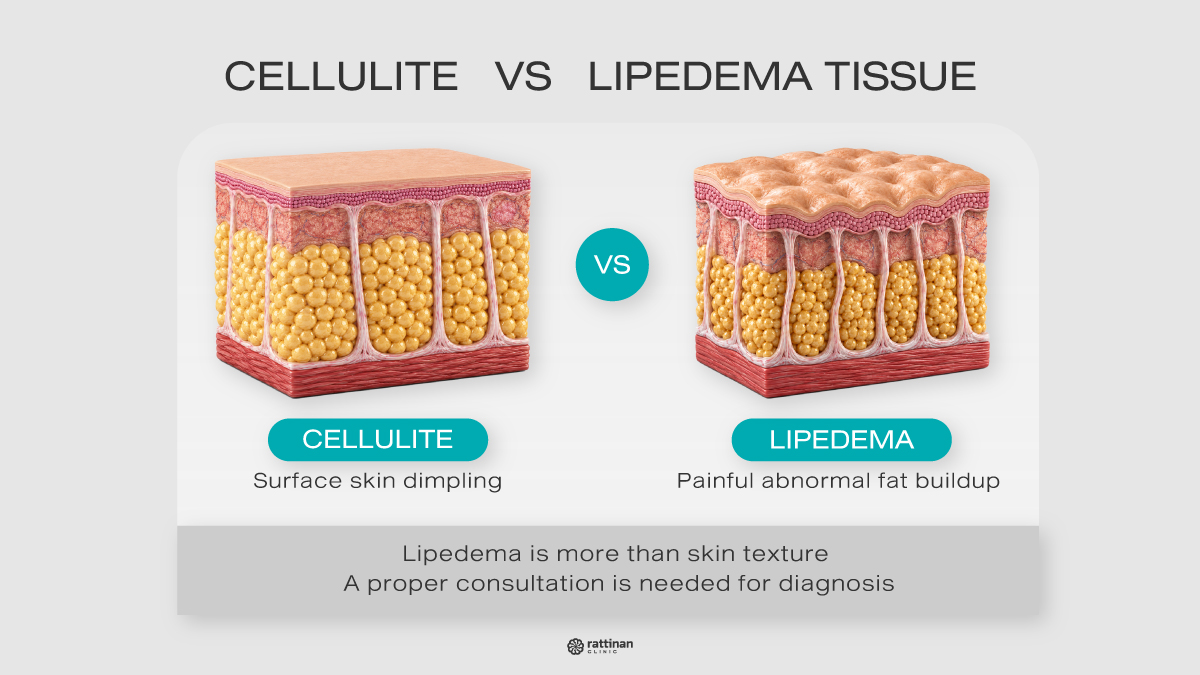
Cellulite and lipedema are often confused because both can affect the look and texture of the legs. But they are not the same. Cellulite is usually a surface-level skin concern, while lipedema is a deeper fat-distribution condition that can cause pain, heaviness, bruising, and swelling.
More Than Skin Texture
Cellulite often appears as dimpling or unevenness on the skin. Lipedema affects the tissue beneath the skin, where abnormal fat can build up in the legs, hips, thighs, and sometimes the arms. This is why lipedema legs may look enlarged, heavy, or out of proportion.
The Difference You Can Feel
Cellulite is usually painless. Lipedema tissue, however, may feel tender, sore, or highly sensitive to touch. Many patients also bruise easily, even from light pressure.
When Healthy Habits Aren’t Enough
Cellulite may become less visible with weight loss, muscle tone, or skin treatments. Lipedema fat is often more resistant. If your legs remain painful, heavy, or unchanged despite healthy habits, it may be time to explore a proper lipedema surgery Thailand plan with a specialist.
Understanding the Stages of Lipedema
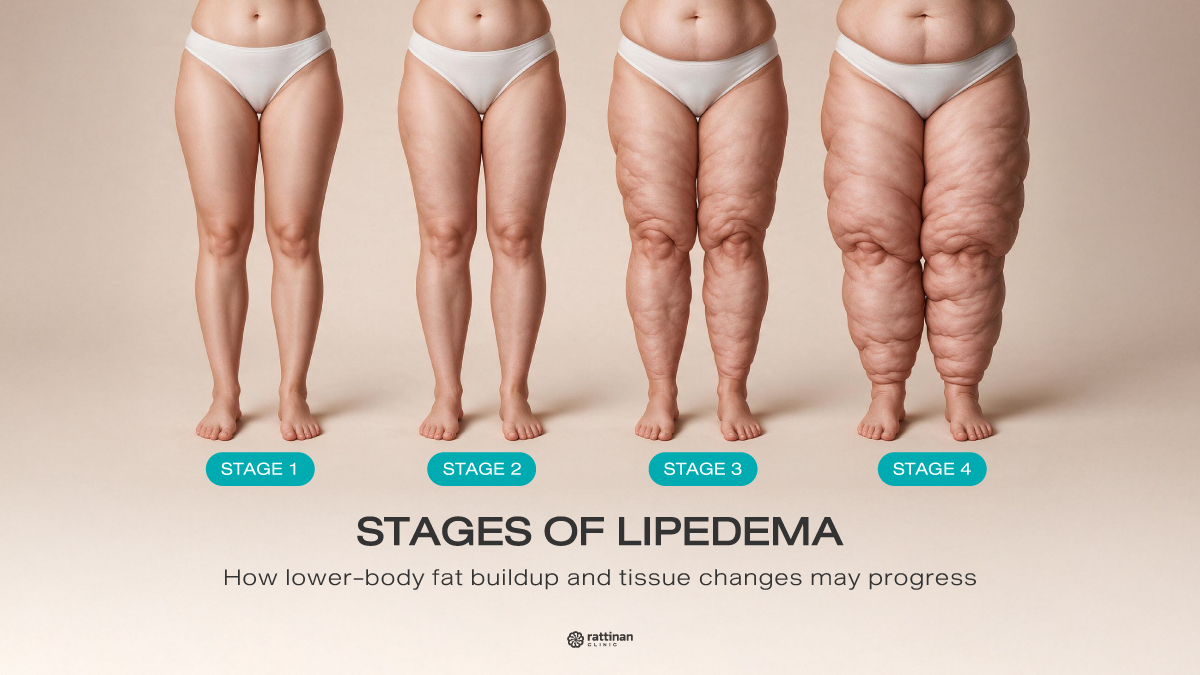
Staging is usually based on visible tissue changes, such as skin texture, nodules, fibrosis, and fat buildup. Pain, heaviness, and emotional stress can still be very real at any stage.
Stage 1: Subtle Changes, Real Discomfort
In Stage 1, the skin may still look smooth, but small nodules or “pebble-like” tissue can sometimes be felt under the skin. Pain, tenderness, swelling, and easy bruising may already be present, even if the condition is not obvious to others.
Stage 2: Texture Becomes More Visible
In Stage 2, the skin may appear uneven, dimpled, or textured, sometimes resembling an orange peel or a quilted surface. The tissue may feel firmer, with larger nodules under the skin. At this stage, lipedema legs may feel heavier, more swollen, and less responsive to rest or elevation.
Stage 3: Heaviness Affects Movement
In Stage 3, larger fat deposits or folds may develop, especially around the thighs, knees, or lower legs. This can affect walking, joint comfort, clothing fit, and daily confidence. A personalised lipedema treatment plan may help reduce discomfort and support easier movement.
When Swelling Becomes More Complex
Experts describe Stage 4 as lipedema with secondary lymphedema, while other specialists refer to this as lipolymphedema rather than a separate lipedema stage. In either case, added swelling requires careful assessment and more specialised support.
Lipedema Treatment: Relief, Support, and Surgery
Lipedema treatment is not about “fixing” your body. It is about reducing pain, supporting movement, and helping you feel more comfortable in daily life. For many patients, care begins with conservative support, such as compression therapy, Manual Lymphatic Drainage, gentle movement, skin care, and anti-inflammatory nutrition. These approaches may help ease heaviness and discomfort, although they do not usually remove lipedema fat itself.
Conservative Care for Daily Comfort
Compression garments may help make walking easier and reduce pain or discomfort in lipedema legs. Manual Lymphatic Drainage, or MLD, may also support fluid movement and help the limbs feel less heavy. These therapies are often used as part of long-term symptom management.
Specialized Liposuction for Lipedema Fat
For suitable patients, specialized liposuction may be considered when symptoms are more severe or when conservative care is not enough. This is different from standard cosmetic liposuction. A lipedema-focused approach aims to reduce abnormal fat while using careful, lymph-aware techniques to protect delicate tissue as much as possible.
MicroAire PAL for Precise Fat Removal
At Rattinan Clinic, MicroAire PAL (Power-Assisted Liposuction) may be used for controlled fat removal in larger or more fibrous areas. Its reciprocating cannula helps break up fat more efficiently, with less tissue trauma compared with traditional manual techniques. For the right patient, this can support lighter-feeling legs, improved mobility, and a more confident path toward relief.
Lipedema Surgery in Thailand: Why It’s a Preferred Destination
For many patients, lipedema surgery in Thailand offers expert care that feels both medically focused and emotionally supportive. Because lipedema affects sensitive tissue, treatment should be planned with care. Lymph-sparing techniques are especially important for reducing abnormal fat while protecting natural lymphatic flow as much as possible.
Since lipedema surgery in Thailand may require multiple sessions, many international patients choose Thailand for advanced surgical care at a more accessible cost than in many Western countries. At Rattinan Clinic in Bangkok, our team supports you from online consultation to travel planning and follow-up care, helping you move forward with clarity, comfort, and confidence.
Plan your surgical journey with our Medical Travel to Thailand guide.
Life After Surgery: Lighter Legs, Easier Movement
For many patients, life after lipedema surgery is about more than changing how the legs look. It is about feeling less weighed down by pain, heaviness, and daily discomfort. As swelling improves and the body heals, the legs may begin to feel lighter, making walking, standing, and moving through the day more comfortable.
Improved mobility can also help reduce strain on the knees, hips, and joints, especially for patients who have lived with painful lipedema legs for many years. Just as important, many women feel a renewed sense of confidence and emotional relief. With the right recovery plan and long-term support, lipedema treatment can help you feel more at home in your body again.
Frequently Asked Questions (FAQ)
Is Lipedema surgery permanent?
Lipedema surgery can remove abnormal fat from the treated areas and may help reduce pain, heaviness, and progression. However, lipedema is a chronic condition, so long-term care such as compression, movement, and healthy habits may still be recommended.
How do I know if I have Lipedema or just Lymphedema?
Lipedema usually affects both sides of the body evenly, often causing heavy, tender, painful legs while the feet remain unaffected. Lymphedema is more related to fluid swelling and may affect the feet or one side of the body more noticeably. A proper consultation is the best way to confirm your condition.
What is the recovery time for Lipedema liposuction?
Recovery depends on the treatment areas, fat volume removed, and whether more than one session is needed. Most patients should expect swelling, bruising, and compression support during healing, with results improving gradually over the following weeks to months.
Our Expert Medical Contributors are licensed doctors and specialists who ensure every article is accurate, trustworthy, and easy to understand. Guided by our commitment to safety, care, and confidence, they provide expert insights to help patients make informed decisions. At Rattinan, we believe that knowledge is the first step to transformation.
Related Articles
Liposuction Bangkok Price with Proven Results
Liposuction in Thailand: A Patient Guide to Personalized Body Contouring