

 Thai
Thai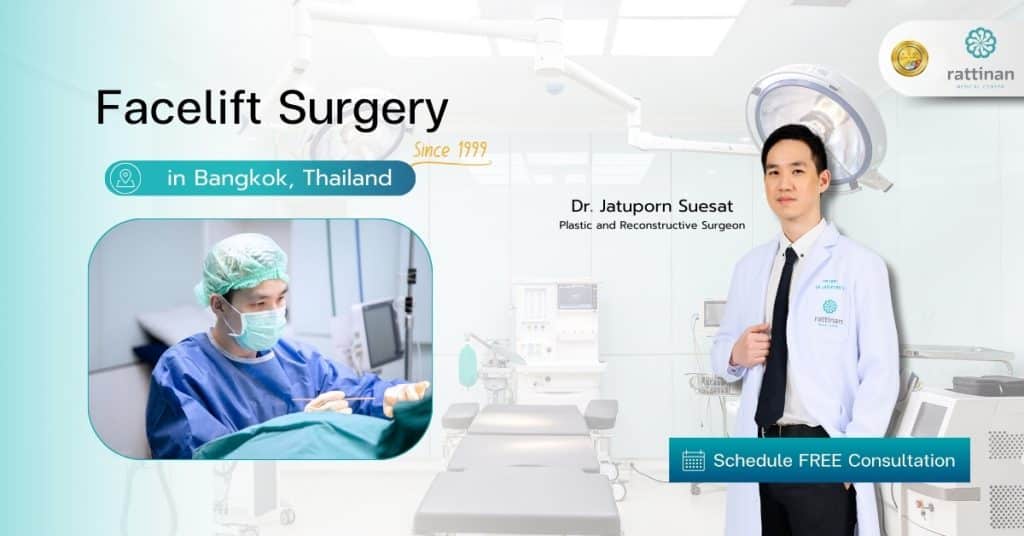
Refresh your look with facelift surgery in Bangkok, Thailand at Rattinan Medical Center. Our expert Dr. Jatuporn Suesat, a skilled plastic surgeon, focuses on solving sagging skin and wrinkles effectively.
We customize every procedure to your unique facial structure, helping to tighten and lift the skin for a youthful glow. With minimal recovery time and advanced techniques, our treatments are designed to help you regain confidence while ensuring a natural, rejuvenated appearance.
Understanding Facelift Surgery
Facelift surgery, or rhytidectomy, is a highly effective procedure for addressing wrinkles and sagging skin. It’s ideal for individuals seeking a rejuvenated, youthful appearance by reducing deep wrinkles and tightening aging skin. Unlike surface treatments, facelift surgery targets deeper layers, including the SMAS layer (Superficial Musculoaponeurotic System), ensuring natural, long-lasting results.
At Rattinan Medical Center, our comprehensive facelift services are tailored to address all concerns, including drooping brows, sagging eyelids, loose cheeks, or undefined jawlines. Utilizing advanced techniques such as the Endoscopic Facelift, we minimize scarring, accelerate recovery, and deliver enduring results.
A facelift doesn’t just rewind the clock on your face—it restores confidence and enhances your natural charm. If you’re considering a solution for wrinkles and skin laxity, a facelift surgery in Bangkok, Thailand may be the right choice for you
Read more – Endoscopic Brow Lift in Bangkok

Benefits of Facelift Surgery
Facelift surgery offers more than just a solution to wrinkles and sagging skin—it provides results that boost confidence and enhance overall quality of life. Here are the key benefits of undergoing facelift surgery in Bangkok:
1. Facial Firmness and Tightening
A facelift addresses sagging skin across the forehead, cheeks, chin, and neck, restoring a firmer, more youthful appearance.
2. Reduction of Wrinkles and Deep Lines
This procedure smooths prominent wrinkles and deep lines, like nasolabial folds, giving the face a balanced and refined look.
3. Restores Youthful Vitality
Facelift surgery rejuvenates the face, reducing signs of fatigue and enhancing natural beauty for a fresher, more vibrant appearance.
4. Long-Lasting Results
Thanks to advanced techniques that target deep layers, including the SMAS, results can last between 5-10 years, depending on post-surgery care.
5. Improves Facial Balance
A facelift not only lifts the skin but also harmonizes facial contours, creating a more proportional and attractive overall appearance.
6. Boosts Confidence
Many patients feel more self-assured in social and professional interactions post-surgery, thanks to a refreshed and youthful look.
Whether you’re looking to smooth wrinkles or redefine your facial contours, facelift surgery in Bangkok offers a pathway to renewed confidence and long-lasting beauty.
At Rattinan Medical Center, you’ll receive care from a team of experienced specialists equipped with state-of-the-art technology and advanced techniques. Our goal is to deliver the best possible results tailored to your unique needs, ensuring a safe and satisfying experience.
Problems Facelift Surgery Can Address
Facelift surgery is an excellent solution for individuals looking to correct signs of aging, including sagging skin and wrinkles, on the face and neck. It’s particularly effective for areas that become more prominent with age. Here are the common concerns that facelift surgery in Bangkok can resolve:
1. Sagging Facial Skin
Facial laxity caused by the loss of collagen and subcutaneous fat results in loose, droopy skin. Facelift surgery restores firmness, revitalizing the face for a fresher appearance.
2. Deep Wrinkles and Lines
Common issues like nasolabial folds, frown lines, or crow’s feet can make the face look tired and aged. A facelift smooths these lines for a youthful, refined look.
3. Undefined Jawline
Blurred or sagging jawlines caused by droopy cheeks or jowls can age the appearance. Facelift surgery sharpens and redefines the jawline for a more contoured look.
4. Drooping Eyebrows and Eyelids
Sagging brows and eyelids can create a sad or fatigued expression. An upper facelift focuses on lifting these areas, making the face appear brighter and more awake.
5. Double Chin and Neck Sagging
Fat deposits under the chin (double chin) and loose skin on the neck can be addressed through a combination of facelift and neck lift procedures, providing a more streamlined profile.
6. Imbalanced Facial Proportions
Facelift surgery not only tightens the skin but also harmonizes facial features, improving symmetry and balance.
7. Wrinkles on the Forehead and Temples
A facelift can address forehead creases and temple lines, smoothing these areas for a rejuvenated, youthful look.
Whether it’s sagging skin, wrinkles, or a lack of facial balance, facelift surgery in Bangkok offers effective solutions to help you achieve a refreshed, natural appearance.
Facelift Techniques at Rattinan Medical Center
At Rattinan Medical Center, we offer a wide range of facelift surgery techniques designed to address various degrees of sagging and wrinkles. Our state-of-the-art methods include Suture Lift, Endotine Lift, Traditional Facelift, and Endoscopic Facelift, each with distinct benefits tailored to individual needs:
1. Suture Lift (Thread Lift)
This minimally invasive technique is ideal for mild sagging and offers a targeted lift without extensive surgery.
Key Features:
- Natural lift: Perfect for cheeks and jawline.
- Quick recovery: Minimal scarring with small, hidden incisions.
- Temporary results: Lasts 1-3 years, great for short-term improvements.
Best For:
- Ages 30–40.
- Minor skin laxity or localized issues, such as the jawline or cheeks.
2. Endotine Lift
This innovative method uses dissolvable Endotine implants to lift deeper layers (SMAS), offering long-lasting results for moderate to severe sagging.
Key Features:
- Long-lasting effects: Results last 5-10 years.
- Addresses deep issues: Perfect for nasolabial folds, under-eye sagging, and mid-face areas.
- Biodegradable implants: No removal surgery required.
Best For:
- Ages 40 and above.
- Moderate to severe skin laxity with the need for a durable solution.
3. Traditional Facelift
A comprehensive approach for advanced aging concerns, targeting all layers of the face for rejuvenation.
Key Features:
- Complete correction: Lifts both skin and SMAS for dramatic results.
- Long-lasting: Results maintain firmness for 5-10 years.
- Enhanced contours: Sharpens the jawline, chin, and cheeks.
Best For:
- Ages 45 and above.
- Severe sagging requiring extensive correction.
4. Endoscopic Facelift
A minimally invasive option that uses a small camera for precision and smaller incisions, perfect for moderate issues.
Key Features:
- Minimal scars and fast recovery: Incisions are 1-2 cm, hidden in the hairline.
- High precision: Enhanced visibility for precise adjustments.
- Natural results: Achieves a youthful look without the “overdone” effect.
Best For:
- Ages 30–45.
- Mild to moderate sagging with a preference for quick recovery.
Finding the Right Technique for You
Our expert team, led by Dr. Jatuporn Suesat, will carefully assess your facial structure and skin condition to recommend the most suitable facelift method. Whether it’s the Suture Lift, Endotine Lift, Traditional Facelift, or Endoscopic Facelift, we prioritize safety, effectiveness, and your unique aesthetic goals.
No matter your concerns, Rattinan Medical Center is committed to helping you regain confidence with beautiful, natural-looking results tailored to your needs.
Why Choose Facelift Surgery at Rattinan Medical Center in Bangkok?
Selecting the right facility for facelift surgery in Bangkok, Thailand is essential to achieving safe and satisfying results. At Rattinan Medical Center, we are dedicated to providing exceptional care at every step of your journey. Here’s why we stand out:
1. Expertise You Can Trust
Our team, led by Dr. Jatuporn Suesat, is composed of highly experienced plastic surgeons specializing in facelifts. With years of expertise, supported by certified anesthesiologists and skilled medical staff, we ensure the highest level of care and precision.
2. Advanced Techniques for Natural Results
- We offer a variety of facelift techniques, including Traditional Facelift, Endoscopic Facelift, Suture Lift, and Endotine Lift, catering to different needs and concerns.
- Our methods focus on delivering natural-looking results that preserve your unique facial features.
- Recovery times are minimized thanks to modern tools and technology that reduce scarring and speed up healing.
3. World-Class Safety Standards
- Accredited Operating Rooms: Certified by the Ministry of Public Health and AACI (Ambulatory Plastic Surgical Center), ensuring a safe environment.
- Sterile Environment: Strict protocols for preventing infections, including robust COVID-19 precautions.
- Safe Anesthesia: Administered by professional anesthesiologists to guarantee your comfort and safety.
4. Cutting-Edge Technology
We utilize specialized surgical equipment, such as advanced cameras for Endoscopic Facelift procedures and high-quality materials like Endotine implants, to deliver precise and satisfying outcomes.
5. Long-Lasting and Valuable Results
Our facelifts provide enduring results, often lasting 5–10 years with proper post-surgical care. This makes your investment in a youthful, confident appearance worthwhile in the long term.
At Rattinan Medical Center, your satisfaction and safety are our priorities. Let us guide you toward a rejuvenated and natural look with the expertise, technology, and care you deserve.
Types of Facelifts at Rattinan Medical Center
Facelifts include Partial Facelift, Full Facelift, Endoscopic Facelift, Endotine Facelift, and Suture Lift, each tailored to address specific concerns like sagging skin, wrinkles, or an undefined jawline. Younger patients (30-40) benefit from less invasive options like Suture or Endoscopic Facelift, while those 40+ may need comprehensive solutions like Full or Endotine Facelifts. Consultation with our specialists ensures the best choice for your goals. Our advanced techniques deliver natural, long-lasting results with minimal recovery time. Trust Rattinan Medical Center to restore your confidence
How Long Do Facelift Results Last?
Facelift results typically last 5-10 years depending on the technique and individual factors. Traditional Facelifts can last 7-10 years by targeting deeper layers, while Endoscopic Facelifts and Endotine Lifts offer 5-7 years of results. Younger patients with healthier skin tend to see longer-lasting outcomes. Proper aftercare, including sun protection and a healthy lifestyle, extends the benefits. Over time, touch-ups like thread lifts or fillers can help maintain a youthful appearance.
Who Is Facelift Surgery Suitable For?
Facelift surgery is ideal for those seeking to reduce wrinkles, correct sagging skin, and restore youthful facial contours, especially when non-surgical methods like creams or fillers are insufficient.
Suitable Candidates:
- Ages 30-40: Mild sagging or specific concerns (e.g., jawline or cheek laxity) can benefit from Suture or Endoscopic Facelifts.
- Ages 40+: Sagging, particularly around the cheeks, jawline, and neck, may require Traditional or Endotine Facelifts.
- Individuals with deep wrinkles, undefined jawlines, or loose neck skin (Turkey Neck).
- Those who desire long-lasting results (5-10 years) from a comprehensive solution.
Not Suitable For:
- Patients with severe health conditions or uncontrolled diabetes.
- Heavy smokers who cannot quit before and after surgery.
- Individuals with unrealistic expectations about halting natural aging entirely.
Preparing for Facelift Surgery
Proper preparation before undergoing facelift surgery is essential for minimizing risks, ensuring safety, and achieving the best results. Here’s how to prepare:
- Health Check-Up
- Undergo basic physical exams, including blood pressure, blood sugar, and heart health assessments.
- Share your medical history, current medications, and any allergies with your surgeon.
- Complete blood tests to confirm fitness for surgery.
- Avoid Certain Substances
- Stop blood-thinning medications at least 2 weeks before surgery (consult your doctor first).
- Refrain from smoking and alcohol for 2-4 weeks before and after the procedure to promote faster healing.
- Consult Your Surgeon
- Discuss your goals and expectations in detail.
- Select the appropriate technique, such as Endoscopic Facelift or Endotine Lift, based on your concerns.
- Follow pre-operative and post-operative care instructions closely.
Steps of Facelift Surger
Steps of Facelift Surgery
Facelift surgery (rhytidectomy) is a customized procedure taking 2-4 hours under general anesthesia (or local with sedation for minor lifts) designed to combat visible facial aging. The surgeon tightens underlying facial muscles and deeper structures, re-drapes facial and neck skin to smooth sagging, and removes excess fat where needed.
The specific technique depends on your anatomy and goals: a SMAS facelift lifts and repositions the fibrous tissue layer beneath the skin to improve the lower face and jawline; a deep plane facelift goes deeper, releasing retaining ligaments and mobilizing the SMAS, fat pads, and soft tissue together for more comprehensive, natural, vertical lifting across cheeks, jawline, and neck; or targeted variations like mini facelift (lower face/neck), mid-facelift (cheeks), or jowl lift address specific areas. During surgery, the surgeon uses deep sutures to secure repositioned tissues and may apply fibrin sealants or platelet gel to minimize bruising.
Post-operatively, you’ll need pain medication (most on day 1), have dressings changed at a day-2 follow-up, experience peak swelling/bruising on days 3-4, and must sleep elevated at 30-45 degrees for two weeks while avoiding strenuous activity or lifting over 5kg to prevent complications and promote healing.
Post-Treatment Care
Post-Treatment Care After Facelift Surgery
Following your surgeon’s personalized recovery instructions is the most critical factor for optimal facelift results. Recovery involves actively managing swelling and bruising while protecting healing tissues through strict positioning, activity restrictions, and lifestyle modifications.
Recovery Timeline:
- Days 1-2: Maximum discomfort requiring pain medication; dressing changes and follow-up evaluation
- Days 3-4: Peak bruising and swelling
- Week 2: Most patients return to work and light activities; swelling decreases
- Weeks 3-4: Real facial contour improvements visible; can resume exercise
- 3-6 months: Final results apparent; complete healing may take up to one year
Essential At-Home Care:
Positioning (First 2 weeks):
- Sleep elevated at 30-45 degrees on 2-3 pillows
- Sleep only on your back for 2-4 weeks (no side/stomach sleeping)
- Bend at knees, not waist, when picking up objects
Swelling/Bruising Management:
- Apply cold packs (wrapped in towel) for 10-15 minutes on, 15 minutes off during first 48 hours
- Reduce sodium to under 1,500mg daily for 2 weeks
- Stay hydrated (6-8 glasses water daily)
- Consider bromelain (after 48 hours) and Vitamin C (1-2g daily) with surgeon approval
Strict Activity Restrictions:
- No vigorous exercise or lifting over 5kg (11 lbs) for 2 weeks—increases blood pressure and bleeding risk
- Avoid intimate relations until cleared
- No smoking for 6+ weeks—significantly delays healing and increases complications
- Avoid sun exposure on treated areas
- Stop blood thinners (aspirin, ibuprofen, NSAIDs) as directed
Warning Signs (Contact Surgeon Immediately):
- Sudden swelling increase on one side
- Severe uncontrolled pain
- Excessive bleeding or signs of infection (fever, warmth, redness, pus)
- Difficulty breathing or chest pain
Bottom Line: Strict adherence to elevation, activity restrictions, and avoiding smoking/sun exposure for the first 2-4 weeks is essential for minimizing complications and achieving beautiful, natural results.
FAQs
1. Does facelift surgery hurt?
Does Facelift Surgery Hurt?
Yes, facelift surgery involves pain and discomfort during recovery, but it’s actively managed with medication and typically decreases significantly within the first week.
Day 1 post-surgery is usually when pain is most intense and prescription medication is most needed, though by days 4-6, most patients no longer require prescription pain relievers. During the procedure itself, you won’t feel pain because it’s performed under general anesthesia (or local anesthesia with sedation for minor lifts). Post-operatively, you’ll experience swelling, tightness, bruising, and possibly numbness or tingling—all normal healing responses that gradually subside over weeks 2-4. Rarely, chronic pain can occur if nerves become trapped in scar tissue, though this often resolves with massage and non-surgical intervention.
Important safety notes: discuss pain management thoroughly with your surgeon, especially if you’re a chronic pain patient or have breathing disorders like sleep apnea (narcotic pain medications carry respiratory arrest risk); never drive, operate equipment, or drink alcohol while on pain medication; and contact your surgeon immediately if you experience sudden, severe pain uncontrolled by prescribed medication, as this may indicate complications requiring urgent evaluation.
2. How much does facelift surgery cost?
Facial Plastic Surgery Starting Price (THB) Upper or Lower Blepharoplasty 69,000 Canthopexy 69,000 Endoscopic Deep Plane Facelift 229,000 - 450,000 Chin Augmentation (Chin Implant) 69,000 Buccal Fat Removal 69,000 Otoplasty 89,000 Rhinoplasty (Nose Job) 89,000
3. Is anesthesia used?
Yes, anesthesia is always used during facelift surgery to ensure you’re comfortable and pain-free throughout the procedure. General anesthesia is most common for standard facelifts, while local anesthesia with sedation may be used for minor or less invasive procedures.
Your anesthesia will be administered by a board-certified anesthesiologist or certified registered nurse anesthetist who remains present throughout surgery and immediate recovery, and anesthesia fees are included in your total surgical cost. While anesthesia is essential for your comfort, it does carry inherent risks including complications, injury, and rarely, death—risks that apply to all surgical anesthesia.
You’ll be asked to have at least two fingernails free of polish or acrylics for vital sign monitoring during surgery, and you must provide explicit consent for anesthesia administration after discussing your complete medical history with your surgical team.
4. Who should not undergo the procedure?
Who Should Not Undergo Facelift Surgery?
Several groups face significantly increased risks and should either avoid facelift surgery or proceed only with extreme caution and specialized monitoring.
Smokers and nicotine users (including patches, gum, or nasal spray) face substantially higher risk of skin loss, delayed healing, and additional scarring—you must refrain from smoking for at least six weeks before surgery, and nicotine testing may be performed with surgery cancellation if positive.
Patients with obstructive sleep apnea who use CPAP devices or nighttime oxygen are at substantive risk for respiratory arrest and death from post-operative narcotic pain medications and may only be considered for surgery with hospital monitoring.
Those taking blood thinners (Plavix, Warfarin, Xarelto) must never stop abruptly without consulting both their plastic surgeon and prescribing physician, as this can cause heart attack, stroke, or death; aspirin and NSAIDs also increase bleeding risks.
High-risk patients for venous thromboembolism (VTE)—including those with multiple medical problems, cancer history, inflammatory bowel disease, obesity, or taking high-estrogen medications—may be advised against elective surgery even with preventative measures.
Finally, patients with unrealistic expectations seeking perfection rather than improvement, or those desiring extreme changes unlikely to be achieved, are poor candidates as disappointment is highly probable; remaining fillers or threads from prior non-surgical treatments can also complicate surgical dissection and increase complication risks.
5. How many days of recovery are needed?
How Many Days of Recovery Are Needed for Facelift Surgery?
Facelift recovery varies by individual factors (age, health, surgical technique), but most patients need 10-14 days before returning to light activities and work, with social downtime lasting up to 3 weeks.
Days 1-4 involve peak discomfort, pain medication needs, and maximum swelling/bruising around day 3-4—you must keep your head elevated and rest.
By week 2 (days 7-14), bruising fades significantly and many feel ready for work and light walking, though strenuous exercise and lifting over 5kg remain prohibited.
Weeks 3-4 mark the end of social downtime as approximately 80% of swelling resolves and you can see real facial contour improvements; most return to normal exercise and activities without visible signs of surgery.
Final results become apparent at 3-6 months as residual swelling resolves, with complete healing—including resolution of minor tightness, numbness, and tingling—taking up to one year. Throughout recovery, you must sleep on your back elevated at 30-45 degrees for 2-4 weeks, avoid vigorous activity for minimum two weeks, and follow gradual activity progression per surgeon clearance. Mini facelifts typically involve quicker recovery than traditional full facelifts, and suture removal occurs between week 1-3 depending on healing progress.
6. Will there be scars?
Yes, facelift surgery will leave scars because the procedure requires incisions, and all surgery produces scars—some more visible than others. However, scarring is usually minimal and strategically hidden within the skin’s natural creases around the ears and hairline to make them as inconspicuous as possible.
Scars may initially appear as a pinkish-red hue that fades over 3-6 months, though they can vary in color, texture, and appearance compared to surrounding skin, and may be asymmetrical or show suture marks.
Unfavorable scarring is the second most common facelift complication (24% of all complications), with reports doubling from 2013-2024.
Factors that increase scarring risk include infection (often requiring revision surgery), smoking/nicotine use (significantly delays healing and causes additional scarring), sun exposure (causes color changes and increased scarring), and certain medical conditions or medications that interfere with healing.
To minimize scarring, follow your surgeon’s post-operative care instructions meticulously—keep the area clean, apply recommended ointments or scar treatments, avoid sun exposure, and absolutely refrain from smoking for at least six weeks before and after surgery. In rare cases where scars become problematic, scar revision surgery or treatments may be necessary, and oversensitive scar tissue often resolves with massage and early non-surgical intervention.
Plastic and Reconstructive Surgeon
The surgeon who performs the treatment
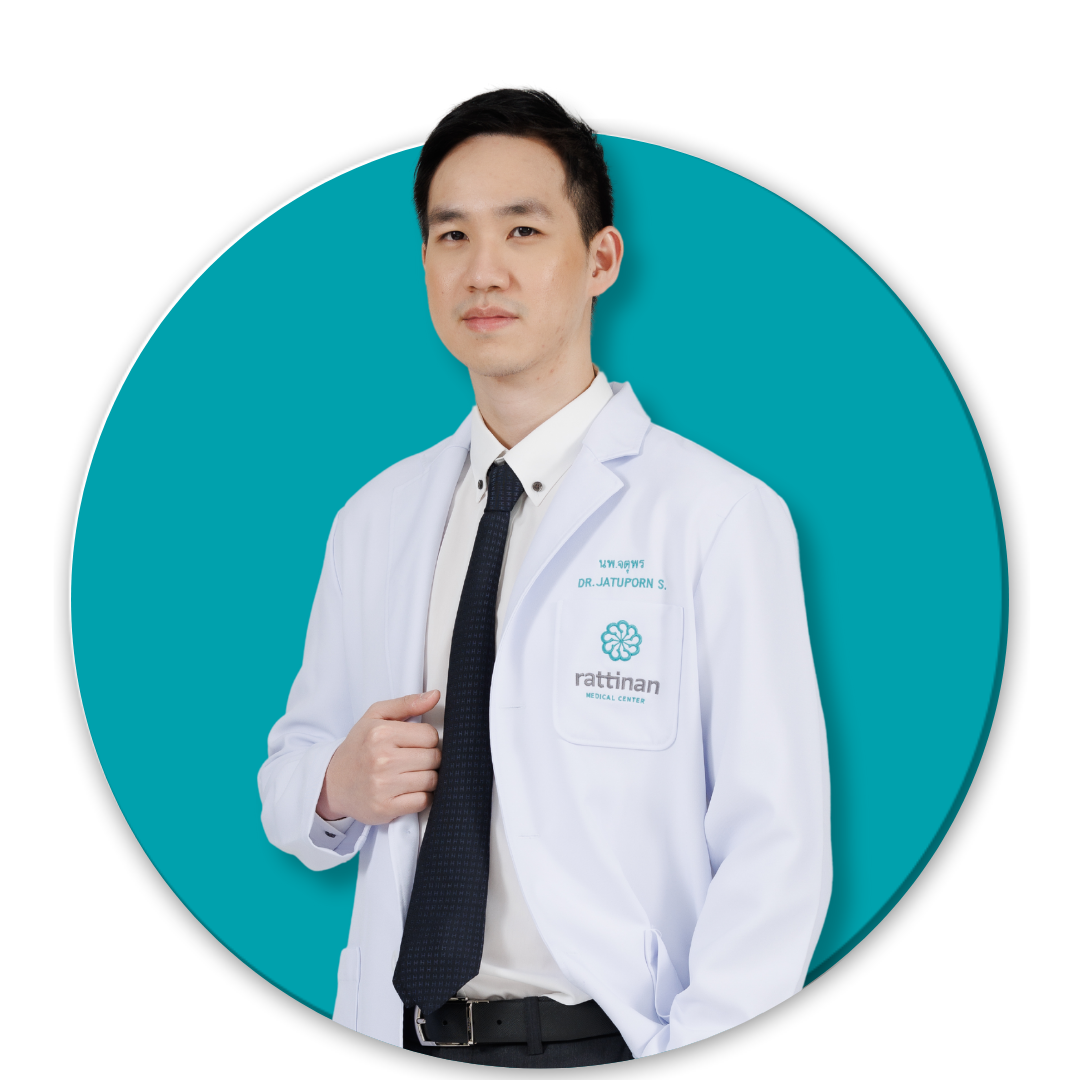
Jatuporn Suesat, M.D, FRCST
Biography
- Doctor of Medicine, Faculty of Medicine Siriraj Hospital Mahidol University
- Board-certified in Plastic and Reconstructive Surgery, Thailand, 2020
- Member, Thai Society of Plastic ad Reconstructive Surgery
- ATLS course certification, 2015
- Plastic and Reconstructive Surgeon, Royal Thai Air Force Medical Department Bhumibol Adulyadej Hospital
- Plastic and reconstructive surgeons Chulalongkorn Hospital Faculty of Medicine
Facelift surgery at Rattinan Medical Center is a long-term investment in your confidence and youthful appearance. With a dedicated team of specialists, we provide attentive care at every step—from consultation and surgery to post-treatment follow-up. Our commitment ensures beautiful, safe, and satisfying results tailored to your unique needs.
Our Expert Medical Contributors are licensed doctors and specialists who ensure every article is accurate, trustworthy, and easy to understand. Guided by our commitment to safety, care, and confidence, they provide expert insights to help patients make informed decisions. At Rattinan, we believe that knowledge is the first step to transformation.