
 Thai
Thai English
Visible fat loss can affect more than your appearance: it can change how you see yourself. Hollow cheeks, sunken temples, or uneven contours may make you look tired or older than you feel.
Lipoatrophy is the loss of the soft fat layer beneath the skin that gives the face and body their natural fullness and shape. It may leave the cheeks or temples looking hollow, deepen shadows beneath the eyes, or create visible dents and uneven contours in areas such as the arms and thighs.
These changes can affect how comfortable you feel in photographs, social situations, or simply looking in the mirror. At Rattinan Clinic, lipoatrophy treatment in Thailand uses carefully planned fat transfer to restore soft volume and natural balance, while preserving what makes you unique.
Explore the signs, causes, and treatment options that can help you feel more comfortable and confident in your appearance again.
Understanding Lipoatrophy: More Than Simple Fat Loss
Lipoatrophy is the loss or shrinkage of subcutaneous fat, the soft layer beneath the skin that gives the face and body their natural fullness and smooth contours. Because several conditions can create hollows, dents, or changes in shape, an accurate assessment is essential before considering treatment.
Lipoatrophy is different from:
- General weight loss, which usually reduces fat across several areas of the body
- Age-related facial volume loss, which develops gradually as the skin, fat, and facial structure change over time
- Lipodystrophy, a broader condition that may involve fat loss in some areas and unusual fat accumulation in others
- Cellulite or ordinary skin dimpling, which affects the skin’s surface rather than causing a true loss of underlying fat
Understanding what is behind the change allows your doctor to recommend care that is safe, appropriate, and thoughtfully tailored to your needs.
Facial Lipoatrophy: Common Signs and Areas of Volume Loss
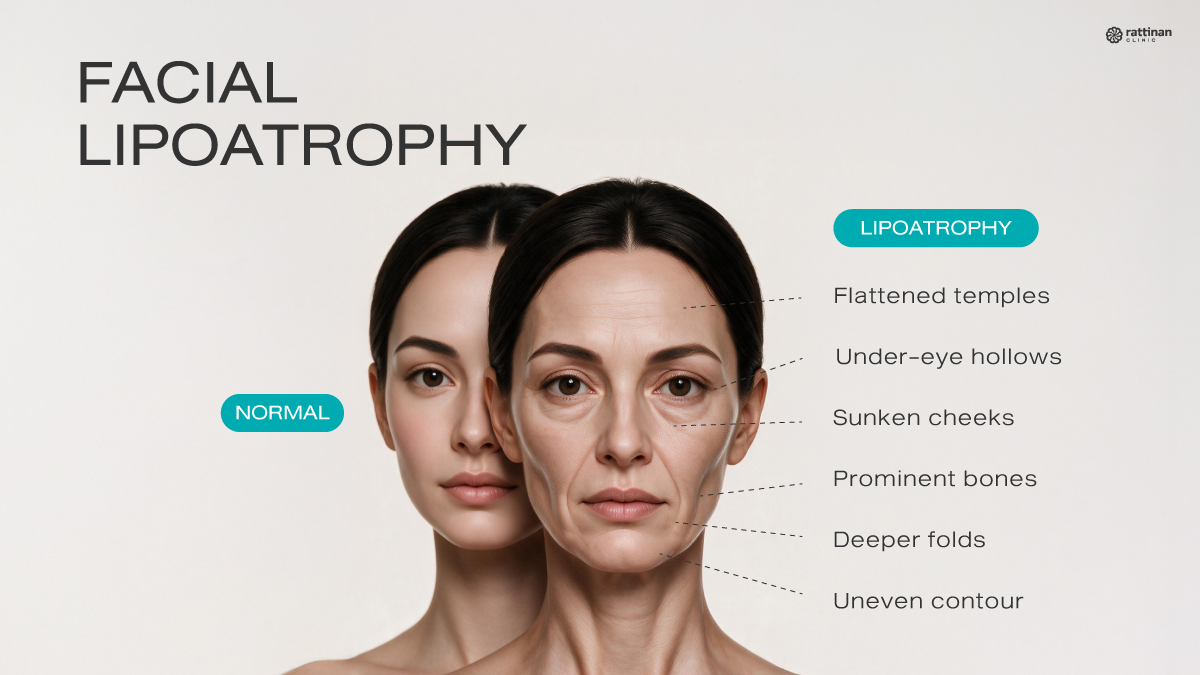
Facial lipoatrophy can gradually reduce the face’s natural softness and fullness. Common signs include:
- Sunken or flattened cheeks
- Hollow temples
- Deep tear troughs beneath the eyes
- More prominent facial bones
- Increased shadows and deeper facial folds
- An uneven or less balanced appearance
Natural aging can create similar changes or make existing lipoatrophy more noticeable. As volume is lost, the face may appear tired, unwell, or older than you feel.
A personalized assessment can identify the cause and guide a treatment plan that restores gentle fullness while keeping your features natural and recognizably yours.
Thigh Lipoatrophy Causes: Why Indentations Form
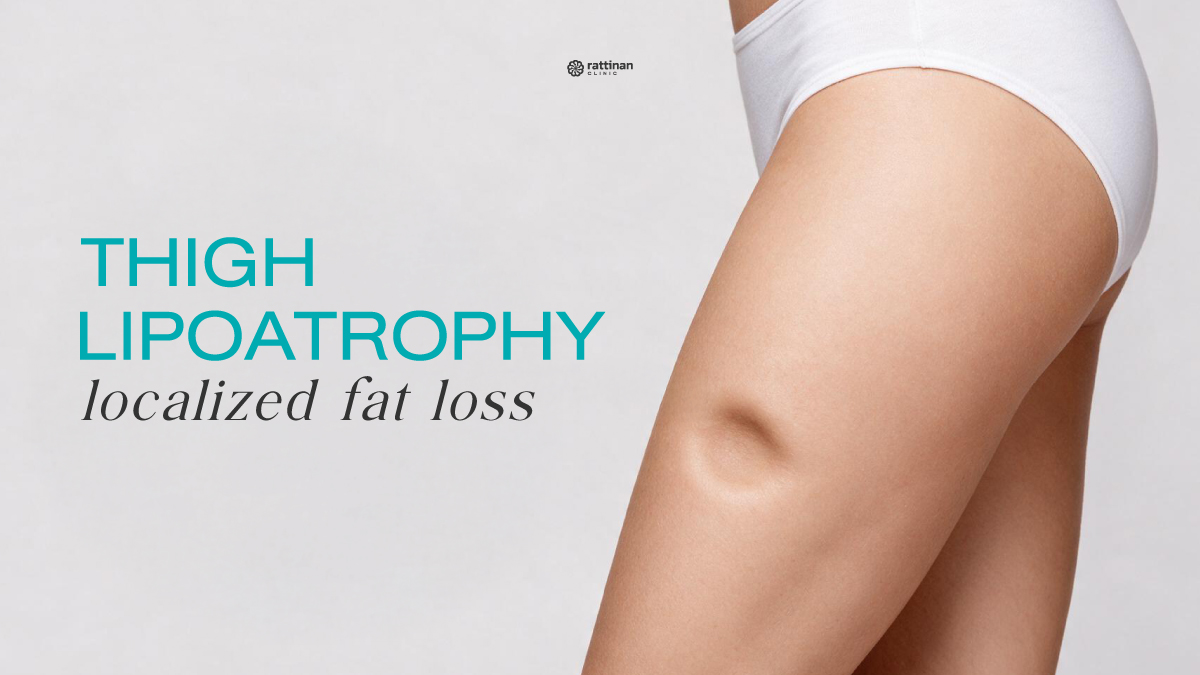
Noticing a new dent or hollow in your thigh can feel unsettling, especially when you are unsure why it has appeared. Understanding the cause is the first step toward restoring smoother, more balanced contours.
Repeated Pressure or Injury
Ongoing pressure or minor repeated trauma can gradually affect the fat layer, sometimes producing a curved or horizontal indentation across the thigh. Once the cause is identified and avoided, the area can be treated to improve its appearance.
Changes Following Injections
Repeated insulin or steroid injections in the same area can sometimes lead to localized fat loss and a small indentation. Rotating injection sites can help prevent this, while treatment can restore lost volume.
Medical or Unexplained Causes
In some cases, thigh lipoatrophy may be linked to an inflammatory or autoimmune condition, such as localized scleroderma, while other cases develop without a clear explanation. A careful assessment helps identify any concerns and guide safe, personalized treatment.
Why Understanding the Cause Comes Before Correction
Before restoring lost volume, it is important to understand why the change has occurred. Sudden, progressive, painful, one-sided, or unexplained fat loss should be medically assessed, particularly when accompanied by skin discoloration, inflammation, weakness, or other unusual symptoms.
Where an underlying condition is identified, it should generally be diagnosed and stabilized before cosmetic treatment is planned. This careful approach helps ensure that fat transfer is both appropriate and timed with your long-term health and results in mind.
Restoring Natural Volume with Fat Transfer in Thailand
For suitable patients with lipoatrophy, fat transfer offers a refined way to restore lost volume using their own tissue. The aim is not to change your appearance, but to gently rebuild softness, symmetry, and balance in the areas where fullness has been lost.
Gentle Fat Harvesting Through Liposuction
A small amount of donor fat is carefully collected from an area with natural fullness, such as the abdomen, hips, or thighs, using liposuction. The harvested fat is then purified to select healthy fat cells for transfer.
Purification and Precise, Layered Placement
The harvested fat is carefully processed before being placed in small amounts across selected tissue layers. This precise, layered technique helps create smoother transitions and more natural-looking contours, while recognizing that fat retention varies from person to person.
Precise Microfat and Nanofat Techniques
For delicate areas affected by facial lipoatrophy, refined microfat can be placed in tiny droplets across carefully selected tissue layers, helping create smooth transitions and natural-looking volume.
Nanofat may also be used when improving fine skin texture or overall skin quality is part of the treatment plan, although it is not intended to provide structural volume.
Learn more about fat transfer in Bangkok and how each technique is personalized to your features.
Why Thailand is a Global Leader in Atrophy Restoration
Bangkok offers international patients a reassuring balance of advanced medical care, personalized service, and value. At Rattinan Clinic, every step is designed to feel clear, supported, and comfortable.
International standards of care:
AACI accreditation (valid through January 2028) reflects a strong commitment to safety and quality.
Seamless patient support:
From online consultation to travel guidance and follow-up care, each stage is carefully coordinated.
Cost-effective treatment:
Fat transfer in Thailand may cost 50–70% less than in many Western countries, depending on the area and complexity.
Transparent planning:
Clear starting prices and personalized recommendations help you make informed decisions with confidence.
Plan your restorative journey with our Medical Travel to Thailand guide.
Recovery and Long-Term Expectations
Swelling, bruising, and tenderness are normal during the first stage of recovery and usually improve within 7–14 days. Around 50–70% of the transferred fat typically establishes a lasting blood supply, while the remaining fat is naturally absorbed; final results become clearer as the swelling settles over the following months.
Because fat transfer uses your own tissue, it can restore larger areas of volume loss with a soft, natural look and feel. Compared with synthetic fillers, it may also provide longer-lasting correction and reduce the need for frequent maintenance treatments, although results vary from person to person.
Frequently Asked Questions (FAQ)
Every experience of lipoatrophy is different. These answers explain the available options for restoring lost volume and what to expect after fat transfer.
Can lipoatrophy be reversed without surgery?
Healthy lifestyle habits can support overall health, but they usually cannot replace fat lost from a specific area. Depending on the cause, non-surgical fillers may restore volume temporarily, while fat transfer offers a longer-lasting option for suitable patients.
Is fat transfer for lipoatrophy permanent?
The fat cells that successfully establish a blood supply can provide long-lasting volume. However, some transferred fat is naturally reabsorbed, so results vary, and a refinement treatment may occasionally be recommended.
How soon after surgery can I resume normal activities?
Most patients should plan for approximately one to two weeks away from work and major activities while swelling and bruising settle. Strenuous exercise should only resume after clearance from your surgeon.
Our Expert Medical Contributors are licensed doctors and specialists who ensure every article is accurate, trustworthy, and easy to understand. Guided by our commitment to safety, care, and confidence, they provide expert insights to help patients make informed decisions. At Rattinan, we believe that knowledge is the first step to transformation.
Related Articles
Liposuction in Thailand: A Patient Guide to Personalized Body Contouring
Natural Fat Grafting in Bangkok at Rattinan Clinic